
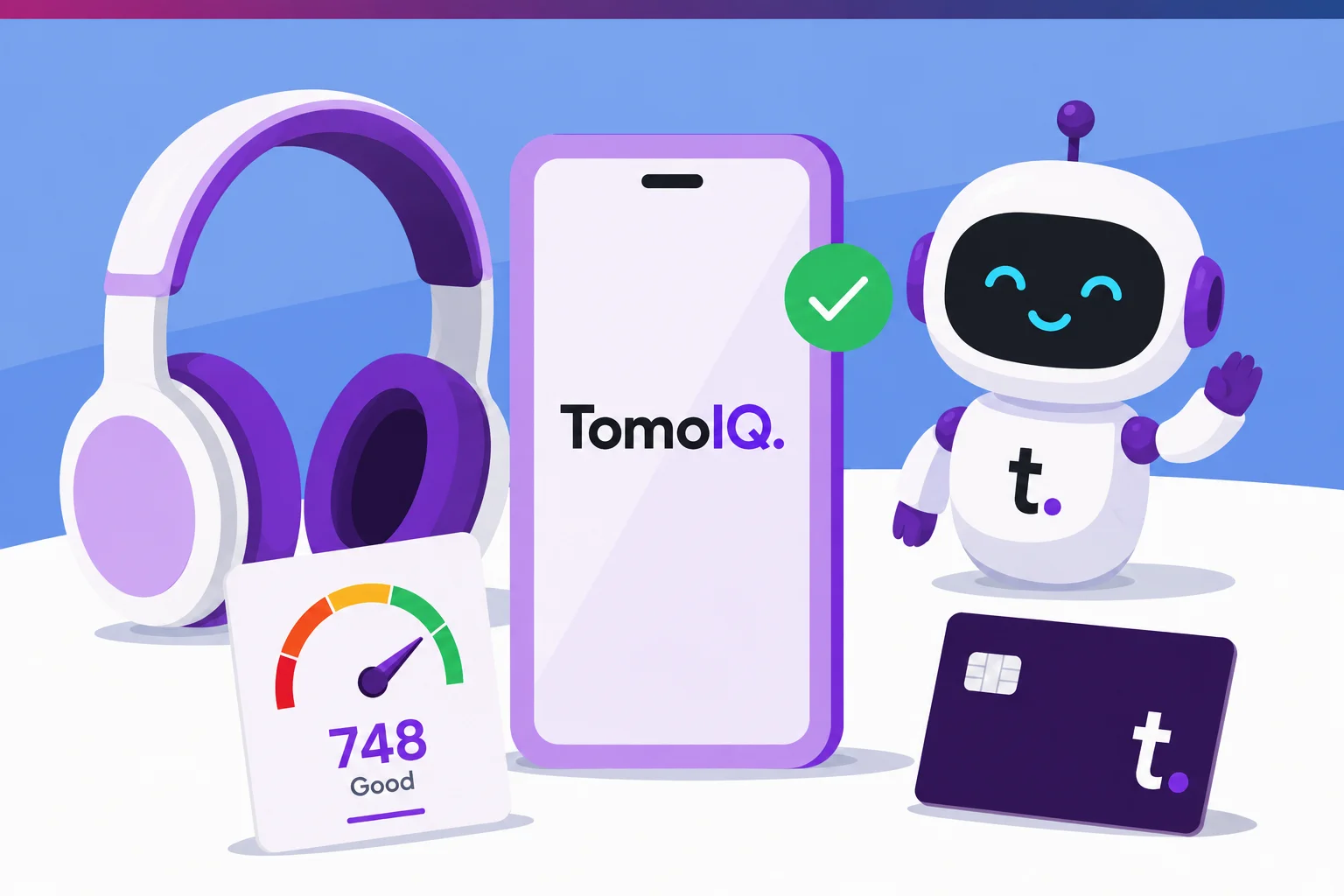

A credit score gauge reading 748 'Good' next to a verified TomoIQ app screen and the TomoIQ mascot

7 Types of Credit Disputes That Can Boost Your Score ("How To" Guide)

Written by Sarah James ·

Meet TomoIQ

Your AI-powered credit assistant.

SUMMARY
  • The seven common credit dispute types are bankruptcy, delinquency, identity theft/fraud, incorrect balance or status, collections, hard inquiries, and general reporting errors.
  • Each type has a specific fix: compare your reports against documentation, then file with the bureau reporting the error, including proof like discharge papers, payment confirmations, or a fraud report.
  • Under the Fair Credit Reporting Act, bureaus must investigate a dispute within 30 days (45 if you submit new information).
  • TomoIQ, TomoCredit's AI financial agent, automatically scans your credit report, flags issues like outdated bankruptcies or suspicious inquiries, and explains next steps in plain language.
Meet TomoIQ, Your AI Credit Assistant →

What Is a Credit Dispute?

A credit dispute is a formal challenge you file with a credit bureau (Equifax, Experian, or TransUnion) to correct inaccurate, incomplete, or unverifiable information on your credit report. Under the Fair Credit Reporting Act (FCRA), bureaus must investigate within 30 days.

    1. Bankruptcy Disputes

    Bankruptcy is one of the most damaging — and most error-prone — items on a credit report. Chapter 7 bankruptcies can stay on your report for 10 years; Chapter 13 for 7 years. Given that timeline, even a small mistake can follow you for a decade.

    • Bankruptcy listed as open when it has already been discharged
    • Accounts included in the bankruptcy still showing individual balances owed
    • Wrong bankruptcy type listed (e.g., Chapter 13 reported as Chapter 7)
    • Bankruptcy still appearing after the legal reporting window has expired

    How to Dispute a Bankruptcy Error

    Pull your reports from all three bureaus and compare them against your court discharge papers. File disputes with each bureau reporting an error and include certified copies of your documentation.

    2. Delinquency Disputes

    A delinquency — any payment reported 30, 60, or 90+ days late — can drop your score significantly. Even a single late mark on an otherwise clean record can cost you. But lenders and servicers make mistakes.

    • Payment was made on time but applied late by the creditor
    • Account was in a hardship, deferment, or forbearance program
    • Delinquency is older than 7 years and should have aged off
    • Payment was returned due to a billing address error — not your fault

    How to Dispute a Delinquency

    Gather bank statements and payment confirmations. File a dispute with supporting documents. If you have written confirmation of a hardship plan, include that too.

    3. Identity Theft & Fraudulent Account Disputes

    Identity theft can silently wreck your credit before you even notice. Fraudulent accounts, unauthorized inquiries, and wrong personal details all need to be disputed as quickly as possible.

    • Accounts or loans you don't recognize
    • Hard inquiries from lenders you never applied to
    • Addresses or employers listed that aren't yours
    • Sudden, unexplained drops in your credit score

    How to Dispute Identity Theft or Fraud

    Place a fraud alert or credit freeze immediately at all three bureaus. File a report at IdentityTheft.gov (FTC). Dispute every fraudulent account with documentation of your identity theft report.

    4. Incorrect Balance or Account Status Disputes

    The account might genuinely be yours — but the data being reported is simply wrong. Incorrect balances inflate your credit utilization, which directly hurts your score.

    How to dispute it: Contact the creditor first — they are the source of the data. If they don’t fix it, file a dispute with the bureau and provide your payoff letter, closing confirmation, or settlement agreement.

    • A loan you paid off still showing a balance
    • A closed credit card listed as open
    • Credit limit reported lower than your actual limit (inflates utilization)
    • A settled collections account still listed as unpaid

    How to Dispute an Incorrect Balance or Status

    Contact the creditor first — they are the source of the data. If they don't fix it, file a dispute with the bureau and provide your payoff letter, closing confirmation, or settlement agreement.

    5. Collections Disputes

    Debt that goes to collections gets sold and re-sold — and every transfer is a new opportunity for errors. Collections disputes are among the most common and often the most winnable.

    How to dispute it: Send a debt validation letter to the collector within 30 days of first contact. If they can’t prove the debt is valid and belongs to you, they must stop reporting it.

    • The debt simply isn’t yours (mixed files, wrong identity)
    • The debt is past the statute of limitations for your state
    • The same debt is being reported by multiple collectors simultaneously
    • The amount reported is inflated with fees or interest you don’t owe

    How to Dispute a Collections Account

    Send a debt validation letter to the collector within 30 days of first contact. If they can't prove the debt is valid and belongs to you, they must stop reporting it.

    6. Hard Inquiry Disputes

    Hard inquiries happen every time a lender checks your credit for an application. Unauthorized inquiries — ones you never approved — are illegal and can be removed.

    How to dispute it: Dispute the inquiry with the relevant bureau and contact the company to demand they explain why they pulled your credit. Unauthorized inquiries must be removed.

    • You never applied for credit with that company
    • The inquiry may signal identity theft
    • A company ran your credit without a permissible purpose (a FCRA violation)

    How to Dispute a Hard Inquiry

    Dispute the inquiry with the relevant bureau and contact the company to demand they explain why they pulled your credit. Unauthorized inquiries must be removed.

    7. How the Credit Dispute Process Works (Step-by-Step)

    The dispute process is your legal right under the Fair Credit Reporting Act. Here’s exactly how it works:

    • Get your free credit reports at AnnualCreditReport.com from all three bureaus
    • Identify the item(s) you want to dispute and note the bureau(s) reporting it
    • Gather supporting documentation (bank statements, letters, court records)
    • File your dispute online, by certified mail, or by phone with the relevant bureau
    • The bureau has 30 days to investigate (45 days if you submit new information)
    • Receive written results — if corrected, request updated reports from all bureaus
    • If rejected, add a statement of dispute, escalate to the CFPB, or consult a consumer attorney

    FAQ: What Is TomoCredit Used For?

    TomoCredit is a fintech company built to help people build and protect their credit — especially those who have been overlooked by the traditional credit system.

    • Automatically scanning your credit report to find errors and inaccuracies
    • Identifying potential disputes — like incorrect delinquencies, outdated accounts, or fraudulent entries — before they do lasting damage
    • Building credit history without requiring a traditional credit score to start
    • Providing AI-powered financial guidance through TomoIQ, TomoCredit's intelligent financial agent

    FAQ: What Happened to TomoCredit?

    TomoCredit has evolved. Originally known for its no-credit-check credit card that helped newcomers and thin-file consumers build credit, TomoCredit has since transformed into a fully AI-native financial company.

    The company’s flagship product is now TomoIQ — an AI financial agent designed to give every person access to the kind of smart, personalized financial guidance that used to be reserved for those who could afford a financial advisor.

    Think of it as TomoCredit leveling up: from a credit card company to an AI-powered financial co-pilot that helps you monitor your credit, catch disputes early, and make smarter money moves every day.

      FAQ: Does the TomoCredit Card Have a $2,000 Limit for $7.99?

      Yes. But the limit depends on your Credit Score and TomoScore. TomoCredit recommends a wide range of credit products, starting from $100 to all the way to $100,000.

      This makes it one of the most accessible credit-building cards available, especially for:

      • New immigrants and international students with no U.S. credit history
      • Recent graduates starting their credit journey
      • Anyone rebuilding credit who wants to avoid a secured card deposit

      How TomoIQ Automates Credit Dispute Detection

      Most people don’t dispute credit errors because they don’t know the errors are there — or they don’t know what to do when they find one. That’s the problem TomoIQ was built to solve.

      TomoCredit’s AI financial agent continuously monitors your credit report and automatically flags the kinds of issues covered in this guide: outdated bankruptcies, incorrect delinquencies, suspicious hard inquiries, stale collection accounts, and more.

      • Automatic error detection — no manual report-reading required
      • Plain-language explanations of what each issue means for your score
      • Step-by-step dispute guidance tailored to your specific situation
      • Ongoing monitoring so new errors don't slip through

      The Bottom Line

      You deserve a credit profile that reflects who you actually are — not a history full of errors and outdated information. TomoIQ is here to make sure it does.

      Related articles

      The TomoIQ mascot celebrating alongside cash and coins bearing the Tomo logo
      Happy AAPI Month: Helping Immigrants Build Credit in the U.S.

      Moving to the U.S. comes with a long list of firsts — first apartment, first bank account, first credit card. This AAPI Month, here's how immigrants and AAPI communities can start building U.S. credit from scratch, and why it matters for everything that comes next.
      Immigrants • Sarah James • May 15, 2026

      The language used on this page is for creative purposes only. TomoCredit (or TomoBoost) does not guarantee an increase in credit score. Individual results vary based on each person's unique credit history and financial circumstances, and subscription payments are non-refundable.