5 Life Essentials That Are Surprisingly Easy to Save Money On
Rising living costs don't mean you have to overhaul your life. These five everyday categories are where small, sustainable changes add up the fastest.

Written by Sarah James ·
Start Building Credit
No credit history required. Apply in minutes.
The last few years have been a masterclass in economic whiplash. From pandemic-induced job losses to inflation spikes, housing market volatility, and rising interest rates, young adults—especially Gen Z—have entered adulthood under financial pressure. And with a job market that's increasingly competitive and tech layoffs making headlines, the message is loud and clear: it's time to get real about emergency funds.
For many Gen Zers, the idea of setting aside money that isn't being actively invested, spent, or working in some way might seem counterintuitive. But the purpose of an emergency fund isn't about growth—it's about protection. It's your financial seatbelt when the ride gets bumpy. And right now, the road ahead looks uncertain. According to recent surveys, employers are slowing down hiring, cost-of-living is still uncomfortably high, and most people can't afford a surprise $1,000 expense without going into debt.
The traditional rule of thumb was to keep three to six months of living expenses in a liquid savings account. Now, financial experts are suggesting stretching that to a full year's worth. Why? Because getting rehired after a layoff can take longer than expected, especially in specialized or saturated fields. Side hustles that once felt like easy wins now face their own pressures—gig platforms are oversaturated, and content monetization is more competitive than ever.
This doesn't mean panic—it means preparation. Building an emergency fund doesn't have to be overwhelming or immediate. What matters is starting. Begin by figuring out your baseline: how much do you actually need per month to cover essentials like rent, food, transportation, healthcare, and minimum loan payments? Multiply that by 3, 6, or even 12 to get your target.
Then get creative. Use windfalls like tax refunds or bonuses to kickstart your savings. Consider pausing unnecessary subscriptions. Automate small transfers into a high-yield savings account. Sell stuff you no longer use. Even putting away $20 a week adds up. This isn't about denying yourself joy—it's about buying peace of mind.
And here's the other piece that doesn't get talked about enough: your credit score is just as critical as your savings account. While your emergency fund acts as a buffer when things go wrong, your credit score is the gateway to future opportunities—think apartment leases, car loans, even job applications in some industries. If you don't have enough savings and need to rely on a credit card or personal loan during a tough time, your credit score directly influences your borrowing power and interest rate.
That's why the smartest play isn't just to save—it's to build a solid credit profile at the same time. You want both tools in your back pocket. A strong emergency fund keeps you from going into debt. A strong credit score gives you more favorable options if you ever do need to borrow. And with tools like TomoBoost that let you build credit without requiring a traditional credit history, there's no reason to wait.
For a generation that's already redefining work, lifestyle, and financial priorities, treating an emergency fund like a non-negotiable tool—just like your phone or laptop—could be one of the smartest power moves. And pairing that with a healthy credit score? That's next-level. In a world where stability often feels out of reach, the ability to rely on yourself financially is a flex that never goes out of style.
Rising living costs don't mean you have to overhaul your life. These five everyday categories are where small, sustainable changes add up the fastest.

From immigrating to the United States at age 11 to building TomoCredit, Kristy Kim reflects on the curiosity, adaptability, and trust that shaped her entrepreneurial journey.
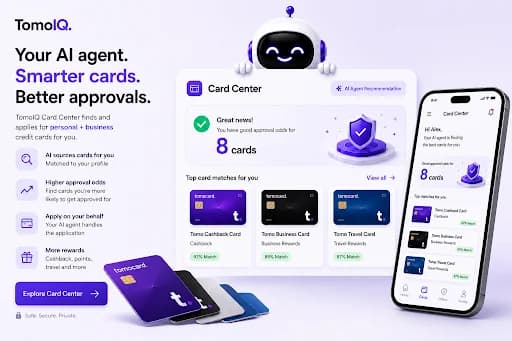
ChatGPT gave surprisingly solid advice on how to build credit — but the more I read its answer, the more I realized it was giving information, not guidance.
The language used on this page is for creative purposes only. TomoCredit (or TomoBoost) does not guarantee an increase in credit score. Individual results vary based on each person's unique credit history and financial circumstances, and subscription payments are non-refundable.
Start Building Credit
No credit history required. Apply in minutes.